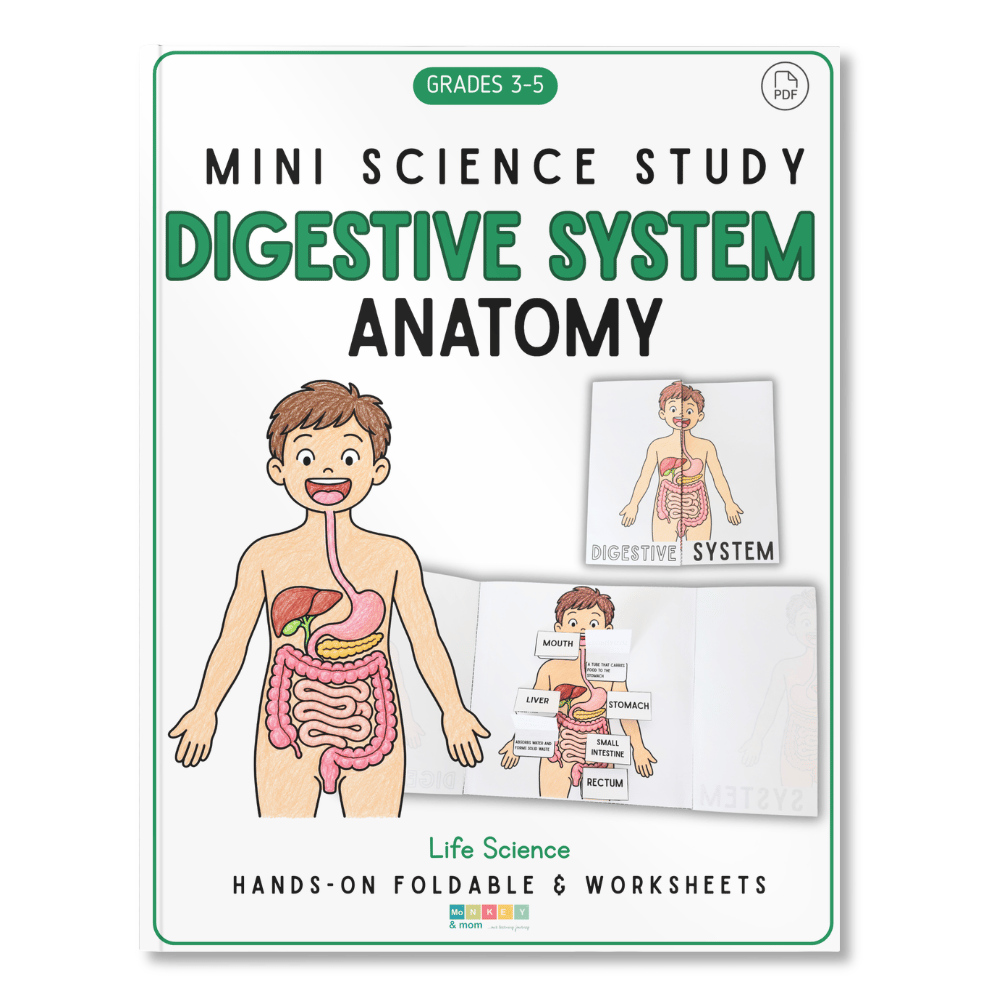
Digestive System Anatomy – Mini Science Study for Grades 3–5
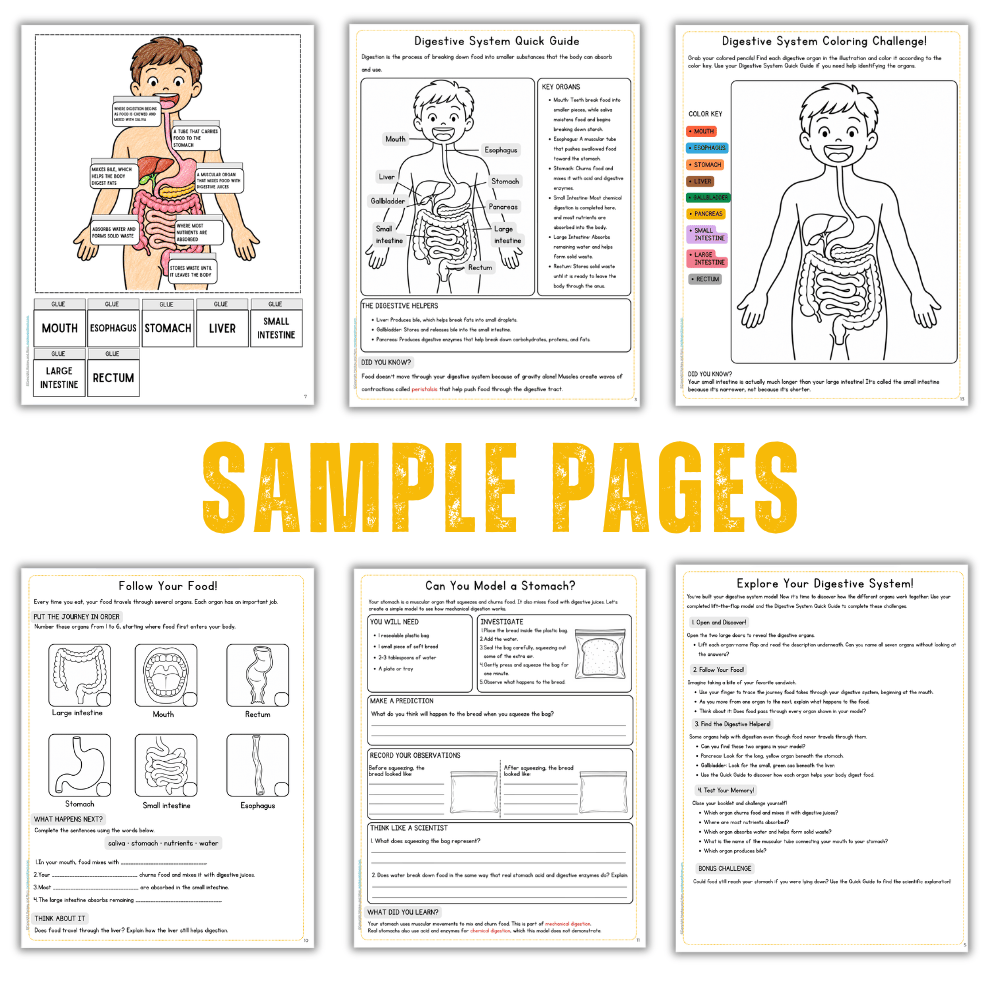
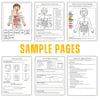
Explore the human digestive system with this 15-page printable mini science study for Grades 3–5! Includes a color and black-and-white lift-the-flap anatomy craft, illustrated quick guide, digestive system worksheets, a hands-on stomach experiment, coloring challenge, science questions, and teacher answer notes. Ideal for homeschool science and elementary human body lessons.
__________________________________________________________
A 15-page printable digestive system mini science study for Grades 3–5, featuring an interactive lift-the-flap anatomy model, digestive system worksheets, a simple science experiment, coloring challenge, and answer keys.
What happens to food after we swallow it? How does the stomach break down food, and why are the small and large intestines so important?
Help kids explore the human digestive system with this hands-on mini science study designed for upper elementary learners!
Children will discover the main digestive organs, learn how food travels through the body, and explore how different organs work together. Along the way, they'll build their own interactive digestive system foldable, complete science challenges, and investigate mechanical digestion with a simple experiment.
This resource is designed for Grades 3–5 and can be used as a short homeschool science lesson, an introduction to human anatomy, or a supplement to an existing life science curriculum.
What's Included
Digestive System Quick Guide
- Illustrated diagram of the main digestive organs.
- Easy-to-understand explanations of each organ's function.
- Introduction to the liver, gallbladder, and pancreas as digestive helpers.
- Interesting information about peristalsis and how food moves through the digestive tract.
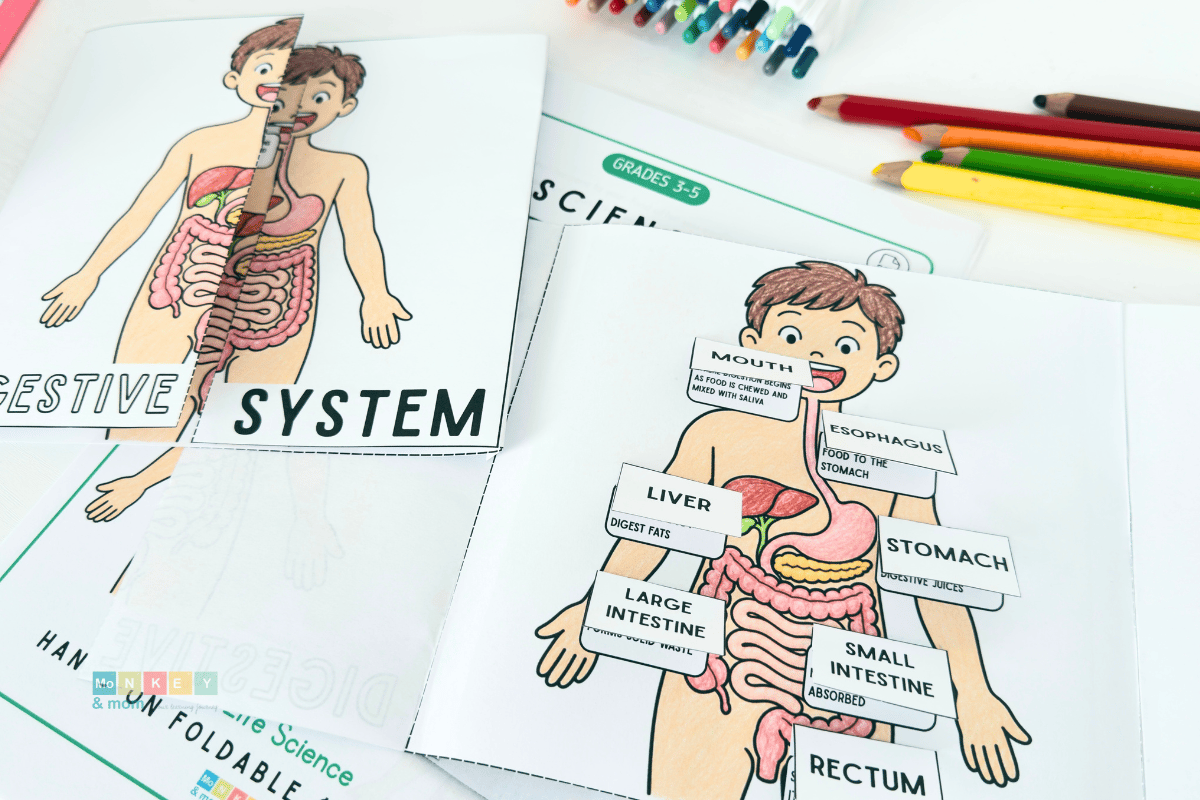
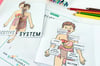
Interactive Digestive System Lift-the-Flap
- Full-color digestive system foldable.
- Black-and-white version for coloring.
- Seven cut-and-glue organ-name flaps that reveal each organ's function.
- Step-by-step assembly instructions with visual guidance.
- Additional exploration challenges to help children use their completed model.
Follow Your Food! Worksheet
- Sequence the organs in the correct order.
- Complete sentences about digestion using a word bank.
- Explore how the liver helps digestion even though food doesn't pass through it.
Can You Model a Stomach? – Science Experiment
- A simple hands-on investigation using bread, water, and a resealable plastic bag.
- Make predictions and record observations.
- Explore mechanical digestion and how it differs from chemical digestion.
- Practice explaining what a scientific model can and cannot demonstrate.
Think Like a Scientist!
- Answer questions about chewing, digestion, and nutrient absorption.
- Learn about villi in the small intestine.
- Explore the functions of the liver and large intestine.
- Apply knowledge of peristalsis to a real-life question.
Digestive System Coloring Challenge
- Identify and color nine digestive organs using a color key.
- Reinforce anatomical vocabulary and organ recognition.
- Discover an interesting fact about the length of the small intestine.
Answer Key & Teacher Notes
- Answers to the worksheets and science questions.
- Expected observations and explanations for the experiment.
- Suggestions for adapting activities across Grades 3–5.
- Basic safety guidance.
Skills Covered
- Human anatomy and digestive system vocabulary
- Understanding organ functions
- Sequencing and cause-and-effect relationships
- Reading scientific diagrams
- Scientific observation and prediction
- Recording and explaining results
- Mechanical and chemical digestion
- Critical thinking and scientific reasoning
- Following instructions and fine motor skills
Suggested Use
This mini science study can be completed in approximately 45–75 minutes, or divided into two shorter sessions.
Start with the illustrated Quick Guide, then build the interactive foldable to explore the digestive organs. Follow up with the sequencing worksheet, the stomach investigation, and the reasoning or coloring activities.
Grade 3: Read the explanations together and provide support with written answers.
Grade 4: Encourage more independent work and complete-sentence explanations.
Grade 5: Explore the differences between mechanical and chemical digestion and discuss the limitations of the stomach model.
Perfect for homeschool science, elementary life science lessons, human body studies, science centers, small groups, and hands-on anatomy activities.
Materials Needed
- Scissors and glue
- Pencil and colored pencils
- A resealable plastic bag
- A small piece of soft bread
- Water
- Plate or tray
File Details
- Format: Printable PDF
- Length: 15 pages
- Grade Range: Grades 3–5
- Subject: Life Science / Human Anatomy
- Includes: Color and black-and-white foldable templates, worksheets, experiment, coloring challenge, assembly guide, and answer notes.
📥 Want a FREE Sample First?
Want to try the foldable first? A free version of the Digestive System Lift-the-Flap activity is available separately.
👉 Get your FREE Digestive System Foldable here: (coming soon on the blog)
This complete mini science study includes the foldable along with all the additional learning activities.
Digital Download Notice
This is a digital PDF download. No physical product will be shipped.
Due to the nature of digital downloads, all sales are final. If you encounter any issues with your file, please contact me at hello@monkeyandmom.com, and I'll be happy to help.